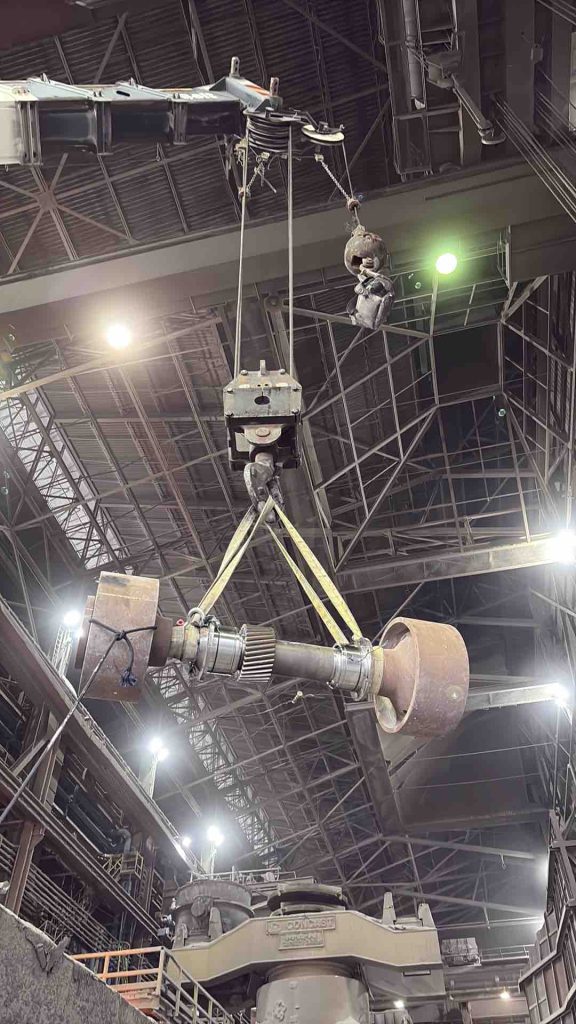
Every crane service company has a customer like this. Forty-year-old top-running double-girder. Two trolleys, one of them out of service more than it’s in. Festoon system patched four times in the last eighteen months. Drum brake on the main hoist gets adjusted every quarter because the lining is half what it was when you started servicing the unit.
The customer keeps calling for another repair. You keep sending a tech. The work order closes, the invoice goes out, the crane runs for a few more weeks. Then it breaks again.
That cycle is comfortable, but it’s also a quiet way to lose the account.
At some point, a smarter service company is going to walk into that plant, run the numbers, and put a modernization proposal in front of the maintenance manager. The maintenance manager is going to look at his repair history, look at your invoices stacked up against the modernization price, and realize he should have made the call two years ago.
The 65% Rule is how you get there first.
What the 65% Rule Actually Says
It’s simple. When the all-in cost to keep a crane running crosses 65% of the cost to modernize it, you stop repairing and you modernize.
All-in cost is not just parts and labor. It is parts, labor, downtime, lost production, overtime to catch up after the crane is back online, expedited freight on the bearing you needed last Tuesday, the inspection findings you keep closing out as “monitor,” and the safety risk that quietly compounds every time you defer a real fix.
Most customers do not track that number. They track the repair invoice, and the repair invoice looks small next to a modernization quote, so they keep authorizing the repair.
Your job is to surface the rest of the math.
What a Modernization Actually Covers
Before we get to the math, get the scope right. A real crane modernization is not a paint job and a new pendant. The work usually includes:
- Bridge and trolley drives (new VFDs, new motors where needed, updated controls)
- Hoist upgrade or replacement, with new brakes and limit switches
- Festoon or cable reel replacement, or a switch to conductor bar
- Wireless radio control to replace pendant and festoon together
- New electrical panel built to current code
- Structural inspection and any required repairs to runway, end trucks, girders
- Updated load testing and recertification
That scope is what the customer is buying. It is also why a modernization quote can look big at first glance. The number reflects a crane that will run another twenty years, not a patch that holds for six months.
The Real All-In Cost of “Just One More Repair”
When you build the repair side of the equation, the line items go well beyond the work order.
1. Repair labor and parts over the last 24 months. Pull every invoice, and add them up. Most owners are shocked by this number alone.
2. Downtime cost. If the crane is down four hours, what does that cost the plant? In a steel mill or a paper mill it can be five figures per hour. In a fab shop it might be one or two. Either way, multiply it by every hour of downtime in the last two years.
3. Inspection findings still open. Every “monitor” note on a frequent or periodic inspection is a repair you have not billed yet. Add the estimated cost of closing those out.
4. Compliance exposure. OSHA citations on overhead cranes have dropped 65% over the last three decades. The penalty dollars on the citations that do get issued are up roughly 600%. The cost of one citation on an out-of-service crane in a plant audit is now bigger than most modernization down payments. PM programs built on OSHA’s inspection schedule are how the best service companies stay ahead of that exposure for their customers.
5. Safety risk. A drum brake that needs adjusting every 90 days is a brake that is one missed PM away from a load drop. You do not have to write a number next to this. The maintenance manager already feels it.
6. The next 24 months. Project forward. If you spent $58,000 over the last two years, you are going to spend $58,000 over the next two, if not more, because the crane is older now and the parts are harder to source.
Add those six lines, and that is the all-in cost. Hold it up next to the modernization estimate. If you are at 65% or above, the math has already made the decision.
How to Run the Conversation
The number does the work. Here is how to walk a customer through it.
Step 1: Build the history together. Sit down with the maintenance manager. Pull every work order, every invoice, every inspection report on that crane for the last 24 months. Most customers cannot do this themselves because the records live in three systems and a binder. If your inspection and service records are clean and exportable, you can do it for them in an hour.
Step 2: Quantify the downtime. Ask the plant manager what one hour of crane downtime costs the operation, get a real number, and multiply.
Step 3: Close out the open inspection findings on paper. Estimate the cost of every deferred repair. Add it to the running total.
Step 4: Show the next two years. Trend the last 24 months forward. The line goes up, not down.
Step 5: Put the modernization number on the table. Now show the modernization quote. Calculate the percentage. If you are at 65% or above, you have your recommendation.
The customer is not going to argue with the math. They are going to argue with the budget cycle, the timing, the capital approval process. That is a real conversation, not a stalling tactic. Help them solve it.
What This Does for the Service Company
A modernization is a multiple of any single repair invoice on the same crane, often many times over once you add up scope, parts, and labor. The margin is better and the schedule is firmer. The customer relationship gets locked in for the next two decades because you are the company that just rebuilt the unit.
It also clears your service backlog. Every modernized crane is a unit that stops generating emergency calls at 4:30 on a Friday afternoon.
The companies that win the modernization conversation are not the ones with the best sales deck. They are the ones with the cleanest service history and the operational data to back the recommendation.
The Documentation Problem
Most service companies cannot run this conversation because they cannot pull the data fast enough. The work orders are in one system. The inspection reports are in a stack of PDFs. The customer’s downtime log lives in a maintenance manager’s spreadsheet.
If it takes you two weeks to build the cost history, the customer is going to authorize the next repair before you finish.
This is why the service companies winning the modernization game are the ones running every inspection, every work order, and every service touch in one connected system, the same approach behind the inspection report that closes deals. Pull a 24-month report on any crane in thirty seconds with crewOS Inspections, hand it to the customer with the modernization quote, and let the number make the case.
Run the Numbers on Your Top Ten Cranes
If you have not done this exercise on your largest accounts, you have modernization revenue sitting on the table. Pick your ten biggest customers, pull the service history on every crane older than fifteen years, and apply the 65% Rule.
You will find at least one unit that should already be in modernization scope.
Download the Modernization ROI Calculator below to run the numbers in five minutes per crane. Drop in 24 months of service cost, downtime per hour, and the modernization estimate. The calculator returns the percentage, the breakeven point, and a one-page summary you can hand to the customer.
The 65% Rule is not a sales tactic. It is the point at which the customer is already losing money. Your job is to be the service company that says so first.
Download the Modernization ROI Calculator
It's Time To Get Started
We’ll give you the edge you need to win over your customers every time.