TLDR: I am opening free weekly office hours for industrial field service teams. Fifteen minutes, bring your messiest workflow question, and I will share what I have seen work across hundreds of operations. No demo, no pitch, unless you ask. Book a slot here.

An ops manager at an industrial contractor said something to me a few months back that I have not been able to shake. We were talking about how his company runs jobs, and he paused and said, “We still do things very, I guess, 1970s.”
He was not embarrassed. He was busy. And he is not an outlier. I have had a version of that conversation hundreds of times with crane service companies, material handling shops, and mechanical contractors across the country. The tools change, the size of the company changes, but the situation underneath is the same: the person responsible for how the work runs has nobody to ask whether there is a better way.
The trades solved this. The office never did.
Think about how a crane tech learns the craft. Apprenticeship. A journeyman watching over your shoulder, correcting your rigging, telling you what he wishes somebody had told him. The knowledge transfers person to person, generation to generation. It is one of the things I respect most about this industry.
Now think about how the person running operations learns their craft. Who apprenticed the service manager into building a dispatch process? Who showed the owner what a healthy invoicing cycle looks like? Nobody did. They inherited whatever the last person was doing, or they invented it under pressure, and then they ran it for fifteen years.
The channels that exist for other questions do not exist for this one. Your peers at other shops are your competitors, so you are not calling them to compare billing workflows. Software vendors will happily talk to you, but they are selling, not teaching. Consultants mostly come from general construction or corporate operations and do not know a JSA from a grocery list. So the question never gets asked, and everyone wings it alone.
What winging it costs
I see the results of the vacuum every week, and they repeat with almost eerie consistency.
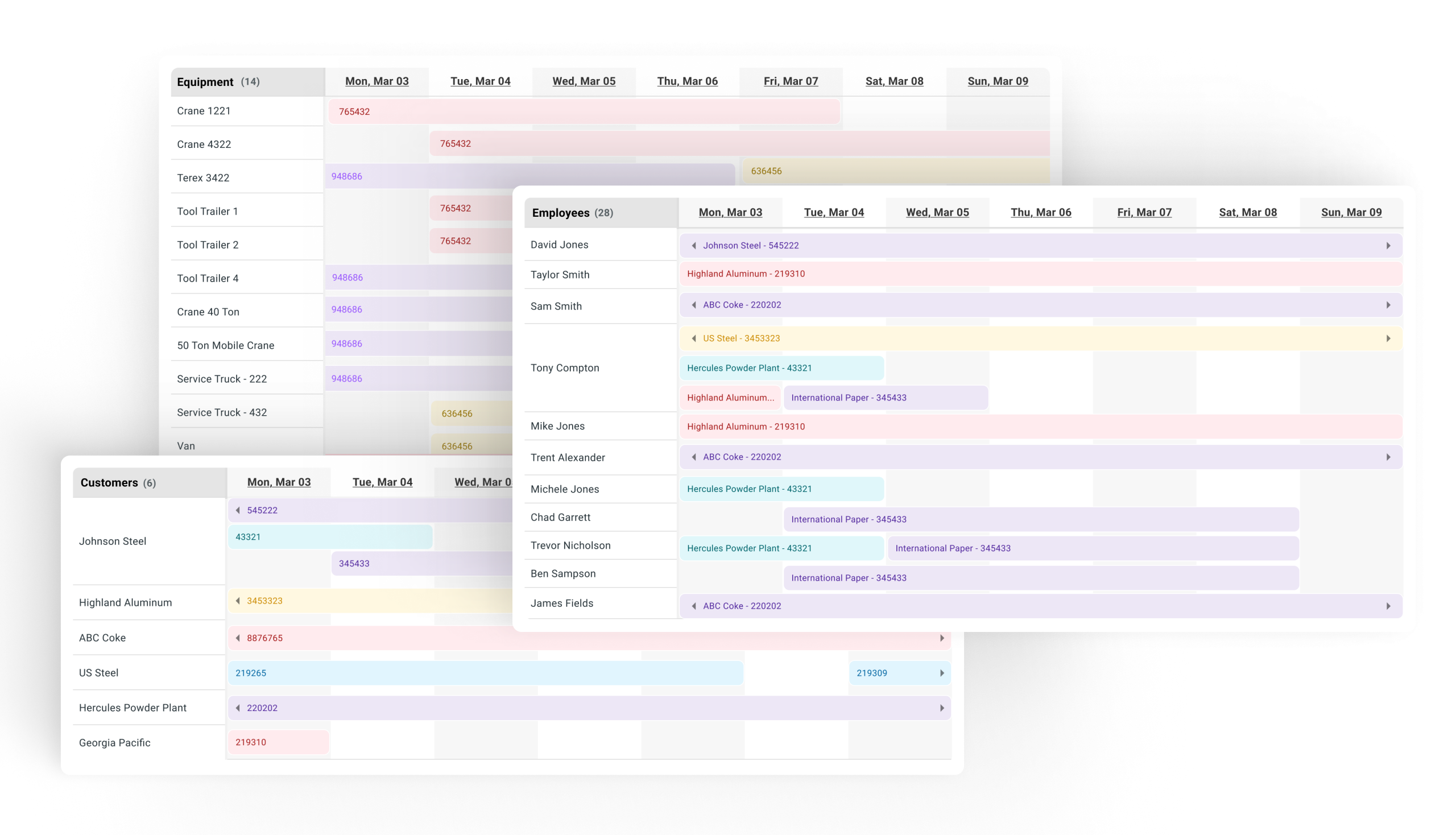
The schedule lives on a whiteboard or in one person’s head, and the whole operation holds its breath when that person takes a vacation. The invoice goes out two to five weeks after the crew finished the job, and the owner quietly eats the credit line interest because that is how it has always worked. One owner of a crane rental company described his billing process to me as hoping they catch every purchase order. His exact words were that it is a lot of hope.
And when these companies do go looking for something better, the search itself defeats them. A service manager on the East Coast told me they would look at a system, find one thing it was missing, and then, in his words, “we blow it off and then we just keep doing what we’re doing.” That is not laziness. That is what happens when you are evaluating alone, with no one to tell you which gaps matter and which ones do not.
The heaviest version of the cost is the one nobody says out loud until they trust you. It came from the owner of an industrial service company, describing what happens if he steps away from the business he built:
“If I leave for vacation, this whole thing goes down.”
That sentence is the best-practice vacuum in nine words. Every process in his company lives in his head because there was never anyone to help him get it out.
Why nobody fills the gap
Here is the uncomfortable part for someone in my seat: no one profits from teaching operations. Publishers do not cover a niche this size. Consultants cannot scale in it. And software companies, mine included, are structurally tempted to turn every conversation into a pitch, which is precisely why operators stopped taking our calls.
I wrote earlier this year about how going digital does not fix this on its own, because most digital tools just recreate the old paper process on a screen. If you missed it, the piece on how you went digital, your data didn’t covers why new software without new thinking changes nothing. The vacuum is not a tooling problem. It is a knowledge problem. Tools are easy to buy. Judgment about how the work should run is not for sale anywhere.
So I am opening my calendar: Office Hours
Something shifted in my own calls over the past year. Companies stopped asking me what crewOS does and started asking what they should do. How other shops handle inspection deficiencies. What a realistic invoicing turnaround looks like. How to get a twenty-year tech to use a phone app without a mutiny.
Those have become the best conversations of my week, so I am making them official.
It is called Office Hours. A few 15-minute slots each week where you bring the workflow problem that has been bugging you and I bring what I have seen work across hundreds of industrial field service operations. No demo. No pitch. Unless you ask for one.
Bring the messy stuff. How do we get JSAs done on phones without a fight. What should our inspection data actually look like. Why does our invoicing take five weeks. If you have one of those questions rattling around, this is the place to ask it.
The details and the calendar are here: Office Hours with Jarrod. Or skip straight to booking a slot: grab 15 minutes on my calendar.
If crewOS is ever relevant to your question, I will say so and you can decide what to do with that. Most of these calls never mention the product. That is the point.
Book your office hours slot.