In industrial field service, the work order is the heartbeat of the job. It’s the record of what was promised, what was done, what changed, and what gets billed. When that record is fragmented across paper, text messages, and three different systems, the entire operation slows down. Crews work from outdated information. Office staff retype field notes. Invoices go out missing pieces. Reports take weeks to compile. The crewOS Work Order Management feature was built to consolidate every active and historical work order into one place, so your crews, your office, and your customers are always working from the same record.
For a lot of industrial service companies, work order management still looks the way it has for twenty years. Crew leads carry paper forms, write notes on the back, and drop them in a file box that rides around in the truck for a week. Supervisors juggle their own version of the work order in email or spreadsheet form. The office has a third version in the accounting system. Nothing matches, and reconciling the three takes hours every week.
The lag from field to office shows up everywhere. Late billing. Missed change orders. Compliance gaps. And reports that take weeks to produce because the source data was never connected in the first place.
The Work Order Struggle in Industrial Service
Here’s what we hear from operations leaders trying to scale industrial service operations on yesterday’s tools:
- Paper work orders that take days to reach the office. ProcessBarron supervisors used to manage field documentation out of file boxes in the passenger seat, and timesheets, inspections, and change orders sometimes wouldn’t reach the office for weeks. Most companies still operate the same way.
- No real-time view of what’s happening on any job. Office staff have to call the field to find out where each crew is, what’s been completed, and what’s pending. Multiply that across 20 active jobs and the day is gone.
- Disconnected tools that don’t talk to each other. Work orders live in one system, scheduling in another, time tracking in a third, and billing in a fourth. Every handoff is a chance for information to get lost.
- Historical job data that’s impossible to find. Need to look up a similar job from two years ago to scope a new quote? Hope the paperwork is still in the filing cabinet, because nobody can search it.
- Crews working from outdated information. A scope change happens in the morning, but the crew in the field is still working from the original work order. The change often gets missed or done wrong.
- Reporting that takes weeks instead of minutes. Pulling together job costs, labor hours, and completion rates requires manually combining data from multiple sources, every single time someone asks.
The lag from field to office shows up everywhere.
How crewOS Fixes It
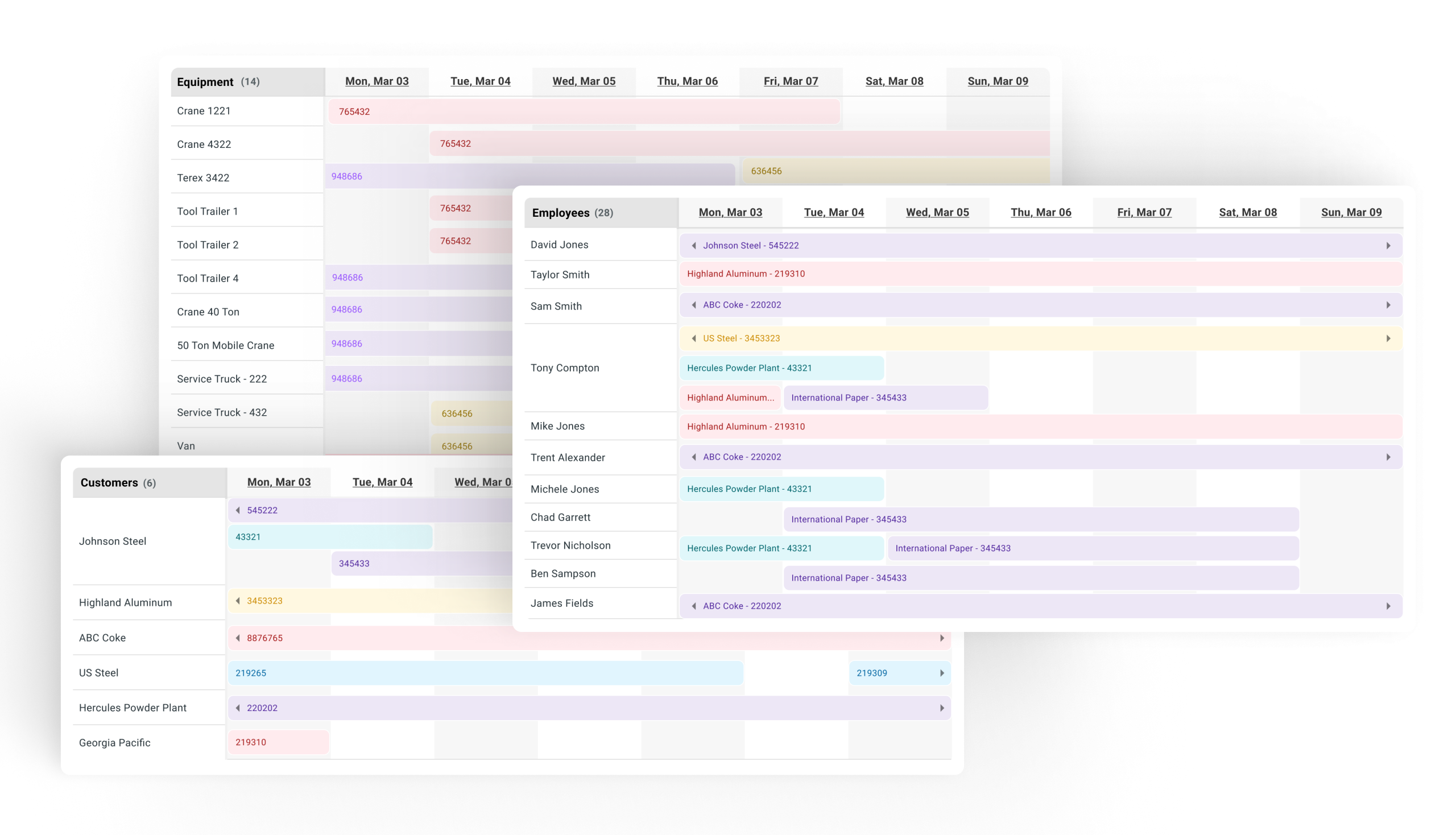
crewOS Work Order Management was built to consolidate the entire job record into one connected system, accessible from the field and the office in real time.
Every work order in one place, from creation to invoice. Quoting, scheduling, field execution, time tracking, change orders, photos, inspections, and billing all attach to a single work order record, end to end.
Real-time updates from the field. Crews update jobs from their phones as work happens, so the office sees status, completion percentages, and outstanding items live, without anyone making a phone call.
Full historical search across every job. Pull up a similar job from any point in your company’s history with crewOS in seconds, including labor hours, costs, change orders, and final outcomes. Use it to scope quotes faster and price more accurately.
Automated active job management. crewOS surfaces overdue items, missing documentation, and incomplete steps automatically, so nothing falls off your team’s radar.
Connection to every other part of the operation. Work orders pull in customer history, asset records, scheduling, and billing without retyping a single field, eliminating the handoff errors that come from disconnected tools.
Mobile-first execution for the field. Crews access full work order context on their phones, including notes from previous visits, scope, attached documents, and customer expectations, so they hit the site informed.
Branded, customer-ready outputs. Every work order can produce a professional summary, report, or invoice on demand, ready to share with the customer without any retyping in the office.
“crewOS has helped us be more efficient on both the front and the back.”
John Fisher, Director of Field Service Operations, ProcessBarron
Why Industrial Teams Need It Now
Industrial customers expect faster turnaround, cleaner documentation, and tighter cost control than they did even three years ago. At the same time, labor is tighter, margins are squeezed, and the cost of a slow billing cycle compounds across every active job. When your work order process depends on paper and memory, you’re paying for that lag on every project.
With crewOS Work Order Management:
- For managers: A live view of every active job, every crew, and every outstanding item across the operation, with no phone calls required.
- For crews: One place to see the scope, the history, and the steps for every job, so they spend their time on the work, not on chasing paperwork.
- For your customers: Faster responses, cleaner reports, and invoices that arrive with the documentation already attached.
- For finance: A tighter loop between work completed and revenue invoiced, with all the supporting data already connected.
When work order data is centralized in one platform, centralized work orders become the system that drives faster billing, better job costing, and a foundation you can actually scale on.
With crewOS, work order management transforms from a paper trail into the operational backbone of your business. The crewOS Work Order Management feature gives your team the visibility, accountability, and speed it takes to win bigger jobs and run them more profitably.
Ready to Take Control of Your Work Orders?
Your work order process should pull your team forward, not hold it back. crewOS gives you one connected system so every job, every change, and every dollar is accounted for in real time.