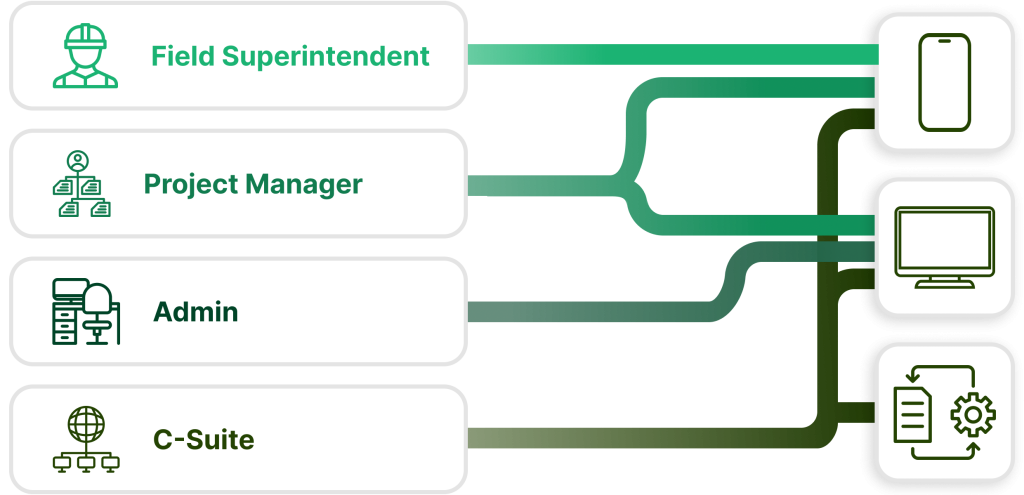
In industrial field service, the org chart on paper rarely matches who actually needs to see what in the system. Foremen need to see their crews but not the whole company. Office staff need access to billing but not safety records. Owners need insight to it all. The crewOS User and Role Management feature was built so the right people see the right information by default, with security, accountability, and scale built in from day one.
For most industrial service companies, access management is an afterthought. Everyone gets the same login, permissions are handed out informally, and sometimes former employees still have credentials that were never disabled. And when something goes sideways, nobody can prove who touched what, because the audit trail was never built into the system.
The fallout shows up in security risk, not just frustration. Sensitive data leaks between crews, former employees retain access to systems they shouldn’t, and when an incident, an audit, or a dispute arises, the company can’t produce a defensible record of who did what and when.
The Access Control Struggle in Industrial Service
Here’s what we hear from operations and IT leaders as their companies grow:
- Everyone has the same access. When the company was small, that worked. Now, dispatchers see HR data, field crews see customer billing, and more.
- Permissions are tracked by memory and tribal knowledge. Nobody can produce a definitive list of who has access to what. Onboarding and offboarding happen inconsistently, and former employees often retain access long after they’ve left.
- Role definitions don’t match how work actually happens. Generic “user” and “admin” buckets don’t reflect the real distinctions between foremen, dispatchers, safety leads, account managers, finance, and field techs.
- No audit trail of who did what. When data gets changed, deleted, or shared inappropriately, the company has no way to look back and see who took the action.
- Scaling the team is painful. Every new hire requires manually granting access to a dozen modules, and every departure leaves credentials in places nobody remembers.
How crewOS Fixes It
crewOS User and Role Management was built so access is structured, scalable, and defensible from the start.
Granular, role-based permissions out of the box. Field techs, foremen, dispatchers, safety leads, account managers, finance, and admins each have a role tailored to how the work actually flows, with sensible defaults that protect the business.
Custom roles for how your company really operates. Every industrial service company has its own structure. crewOS lets you define custom roles that match your org chart, your departments, and your trust boundaries.
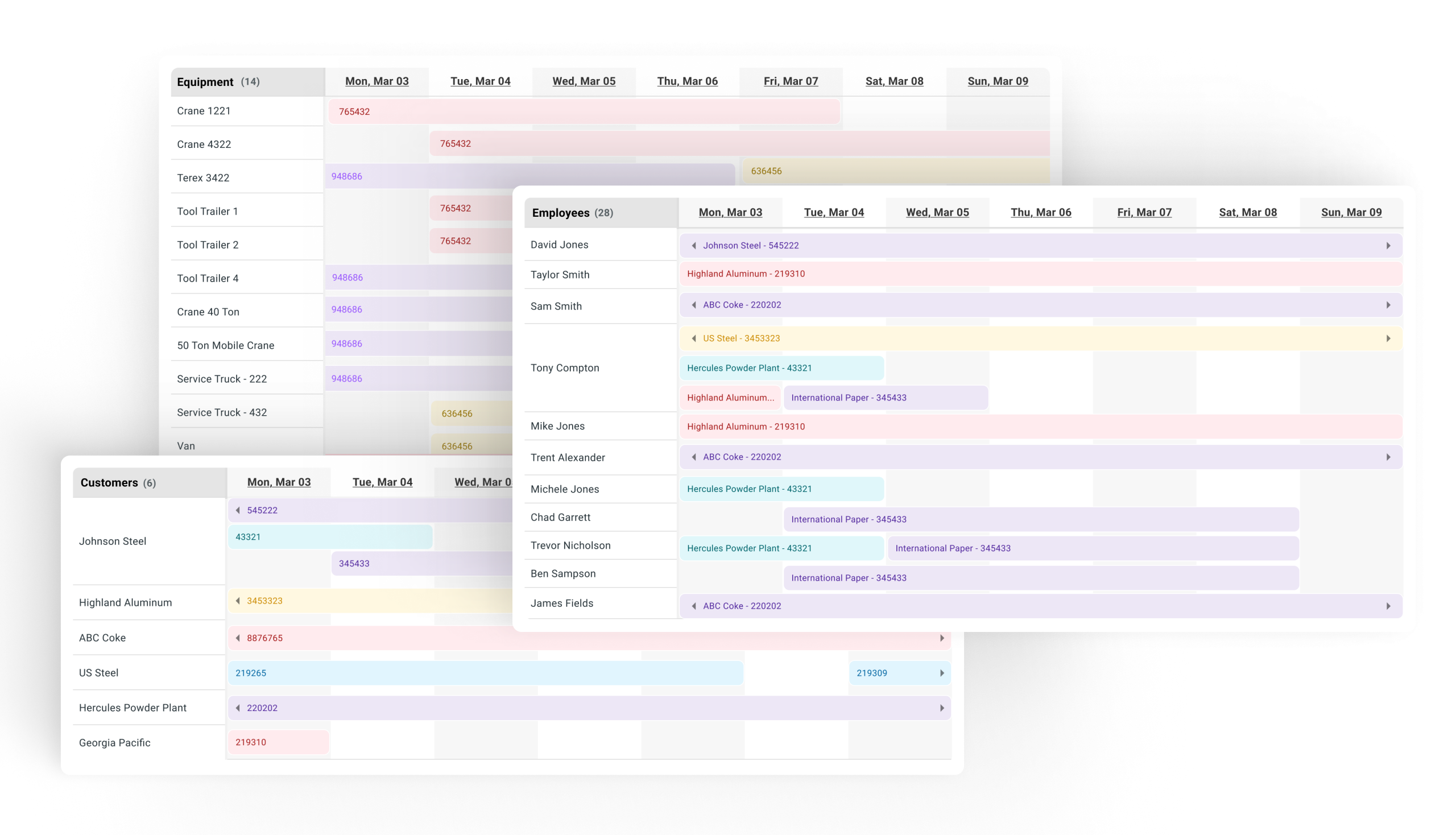
Site-, crew-, and customer-level access controls. Permissions can be scoped to specific sites, specific crews, or specific customers, so people see the slice of the business that’s relevant to their job and nothing more.
Customer-portal feature. crewOS offers a separate feature that allows your customers access to a customer-facing portal with all customer-related information at their fingertips.
Clean onboarding and offboarding. New users are added with the right role in a single step, and departing users can be deactivated cleanly, immediately, and across the entire platform.
Full audit trail of user actions. crewOS tracks who accessed what, when changes were made, and which records were updated, building a defensible record for audits, disputes, and security reviews.
Single sign-on and enterprise authentication options. crewOS integrates with the identity systems most industrial companies already use, so access management stays consistent with the rest of the IT environment.
Access control isn’t a glamorous feature, but it’s a necessary one of a healthy operation.
Why Industrial Teams Need It Now
The industrial service companies growing fastest are also the ones taking on more sensitive data, more customer integrations, and more compliance pressure. Customer-side audits ask hard questions about who can see what. Insurance carriers ask whether former employees have been removed from systems. ERP integrations require clean role management.
At the same time, workforce turnover in field service is higher than in most other industries. Crews come and go, supervisors get promoted, and account managers rotate. A user management system that depends on memory and tribal knowledge can’t keep up.
With crewOS User and Role Management:
- For managers: Confidence that crews see what they need, customers see what they should, and no one sees what they shouldn’t.
- For IT and operations: A clean, scalable system for onboarding, offboarding, and managing access across the company, without tribal knowledge.
- For executives: A defensible record of who did what, when, and to which data, which is exactly what auditors, insurers, and customers increasingly require.
When access control is connected to roles, jobs, sites, and customers in one platform, access becomes one of the strongest, quietest protections the business has.
With crewOS, user and role management transforms from a side concern into a structural advantage. The crewOS User and Role Management feature scales with the operation, protects sensitive data, and builds the audit posture industrial customers and regulators increasingly demand.
Ready to Lock Down the Right Access for the Right People?
crewOS gives you role-based permissions, a full audit trail, a customer-facing portal, and more, so the right people see the right information, every time.