In industrial field service, managing crews is more complicated than assigning a name to a job. You’re juggling who’s available today, who has the right certifications, who’s experienced with similar work, and what equipment is needed, all while trying to keep downtime and delays to a minimum.
When you get it right, it looks seamless. When you don’t, you end up with double-booked crews, mismatched skills, idle equipment, scheduling conflicts, and frustrated crews, customers, and managers.
If you’re ready to tighten up crew deployment and maximize efficiency, here’s how smart scheduling can help you manage technician availability, skills, and job assignments.
The Real-World Challenge of Crew Management
For many companies, scheduling is still a mix of spreadsheets, whiteboards, texts, and calls. That may get the job scheduled initially, but it doesn’t scale when:
- Crews move between multiple sites frequently
- Jobs require special certifications (e.g. crane operation, welding, rigging)
- Outages or emergency calls interrupt planned schedules
- Equipment availability doesn’t match crew assignments
With traditional tools, a dispatcher often ends up spending more time juggling than actually dispatching. Miscommunication becomes the norm, and errors look like overlooked qualifications, wrong tools, late starts, unpaid overtime, and unhappy customers.
On top of that, when everything is tracked manually, there’s no real visibility. If a job changes or a crew member calls out, it’s often a scramble to reassign.
Key Principles for Efficient Crew Scheduling
If you want to do better, these principles are your starting point:
1. Always Know Who’s Available and When
Maintaining an up-to-date availability roster is critical. That means:
- Tracking vacations, PTO, training, certifications, and blackout dates
- Knowing who’s on call, who’s assigned to long-term jobs, and who’s floating
2. Match Skills and Certifications to Job Requirements
Not all jobs are equal. Some demand special training, equipment, or licenses. Efficient scheduling requires:
- A database of crew skills, certifications, and qualifications
- Tags or filters so you can easily assign properly qualified technicians when needed
- A system that prevents unqualified assignments, even under tight scheduling pressure
This ensures compliance, safety, and quality, not just speed.
3. Schedule with Equipment & Asset Availability in Mind
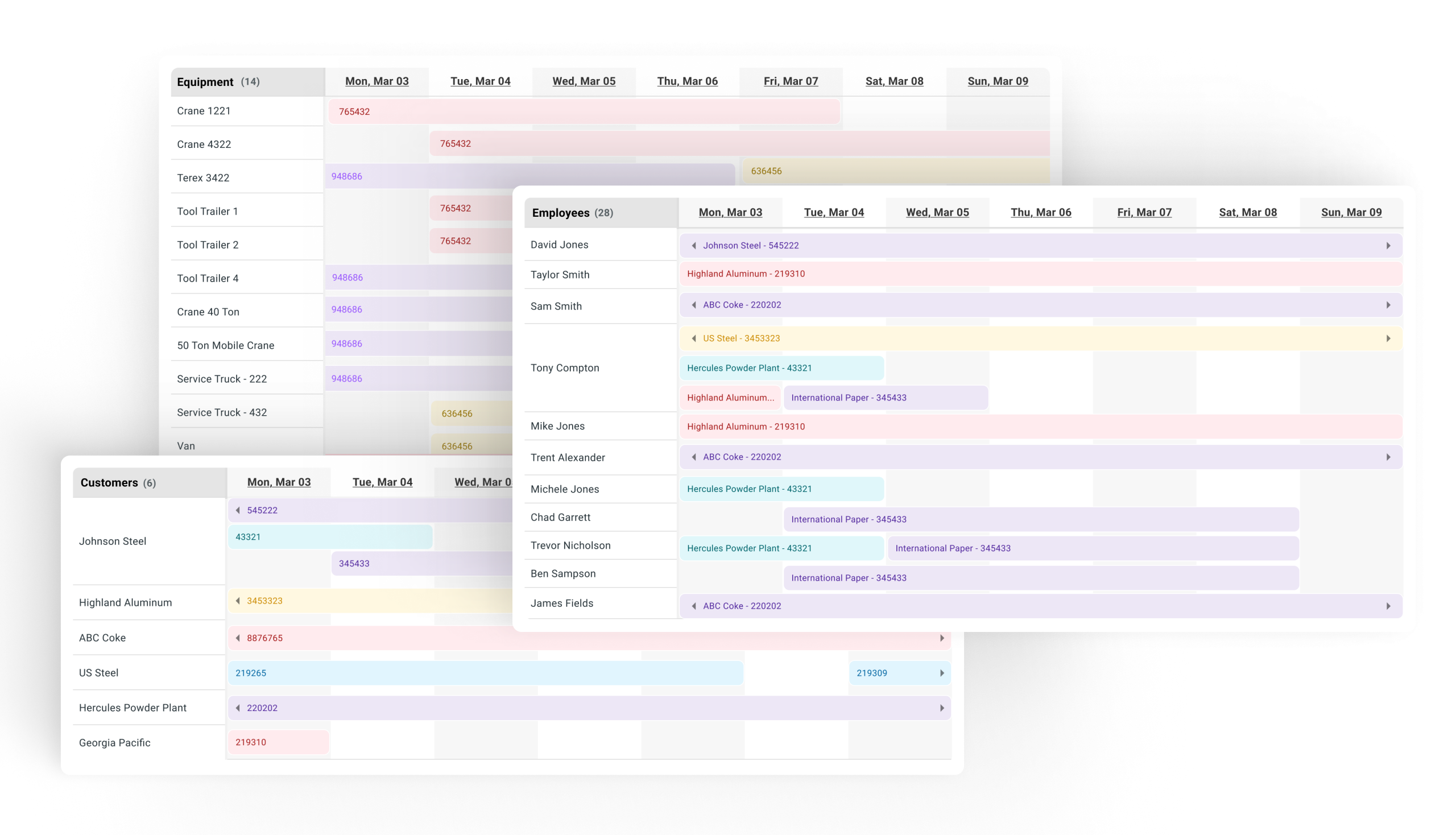
Efficient scheduling ties crew assignment to available assets like cranes, lifts, and other tools.
When you schedule jobs with both crew and equipment in view, you avoid conflicts, delays, and waste.
4. Plan for Flexibility & Real-Time Changes
Field service is unpredictable. Emergencies happen, weather affects scheduling, equipment breaks down, and jobs shift. The only way to manage this is with a scheduling process that supports real-time updates:
- Allow dispatchers to reassign crews on the fly.
- Notify all stakeholders instantly, including the crew, office, and customer.
- Maintain automatic records so nothing gets lost in emails or spreadsheets.
5. Maintain a Single Source of Truth for the Entire Team
When office, dispatchers, crews, and management operate out of different systems, problems arise. The goal should be one scheduling system that everyone accesses. This ensures:
- No more conflicting spreadsheets
- No more lost texts or missed messages
- Clear, shared visibility of schedule status, assignments, equipment, and changes
- Shared transparency builds trust and reduces friction.
What Efficient Scheduling Enables
When you follow the principles above, you unlock tangible benefits:
- Reduced downtime. Crews show up with the right skills and tools for the job.
- Faster response to unplanned changes. Reassign crews or shuffle work instantly.
- Better compliance and safety. Only qualified crews get assigned to jobs requiring special certifications.
- Improved crew morale. Clear scheduling reduces confusion, frustration, and overwork.
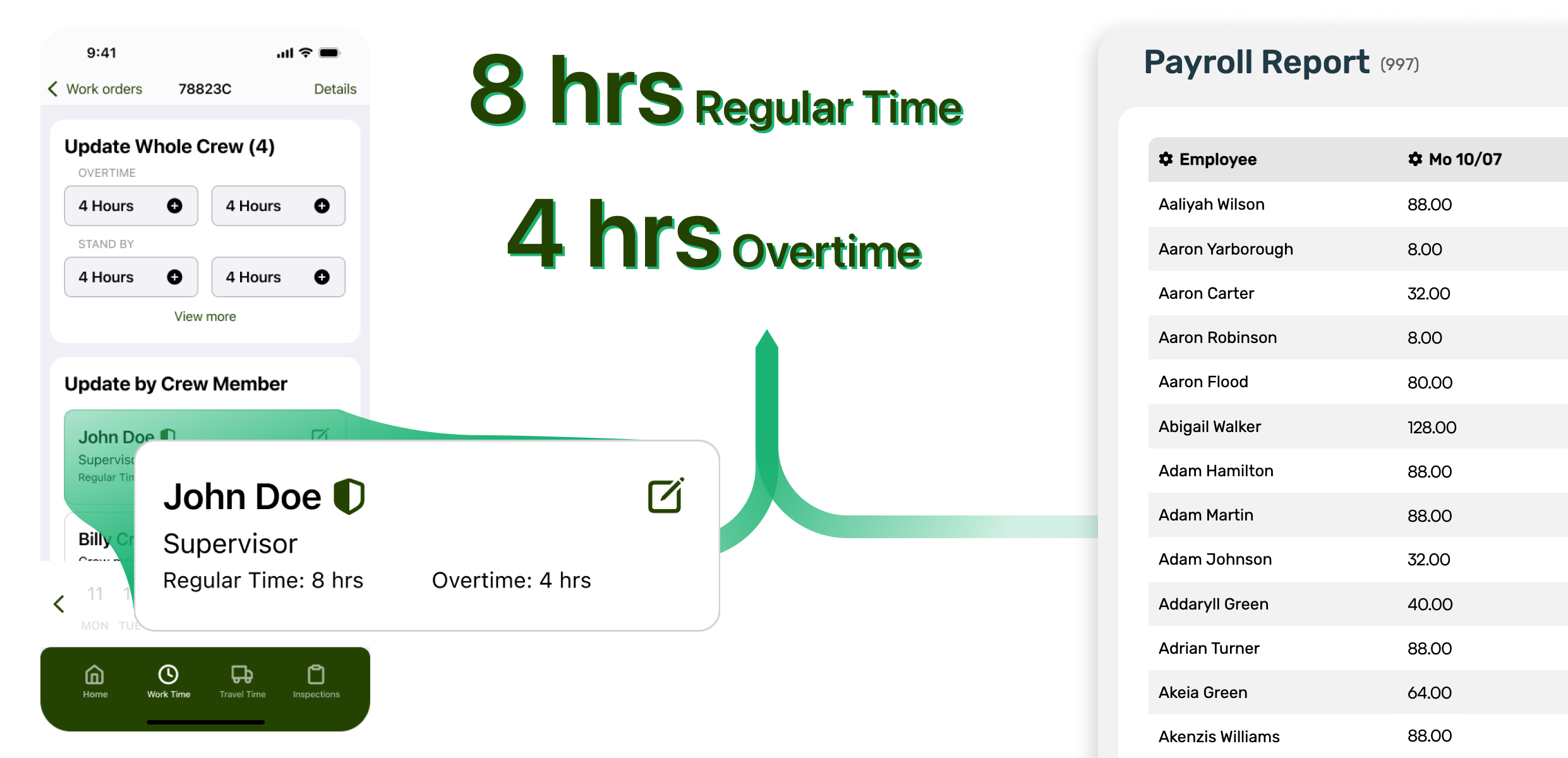
- More accurate billing and time tracking. Fewer errors, better job costing, cleaner invoicing.
- Greater capacity for growth. Scalable scheduling without ballooning administrative burden.
Efficient scheduling allows you to build a smarter, more resilient operation.
The Role of Smart Scheduling Tools (Why They Matter)
All of the above is theoretically possible with manual processes, but doing so consistently is almost impossible without digital tools built for field service. That’s why companies adopting modern scheduling solutions stand out. These tools provide:
- Real-time updates to crew status, availability, and qualifications
- Centralized records of equipment, job details, and resources
- Automatic notifications for changes, conflicts, or assignments
- Integration with job management, time tracking, inspections, and asset management
The companies pushing boundaries won’t succeed with spreadsheets and guesswork alone. They’ll need systems that reflect the speed, complexity, and unpredictability of real-world service work.
Moving Forward: What You Can Do This Week
If you’re reading this and thinking you’re due for a scheduling overhaul, here’s a quick checklist to get started:
- Audit your current scheduling system: how are you tracking availability, skills, equipment, and changes?
- Build a skills/certification register for all your technicians—digital or on paper.
- Map out which jobs require what skills and assets. (Treat scheduling like resource planning, not calendar filling.)
- Identify how many manual changes you made last quarter due to missing equipment or crew conflicts.
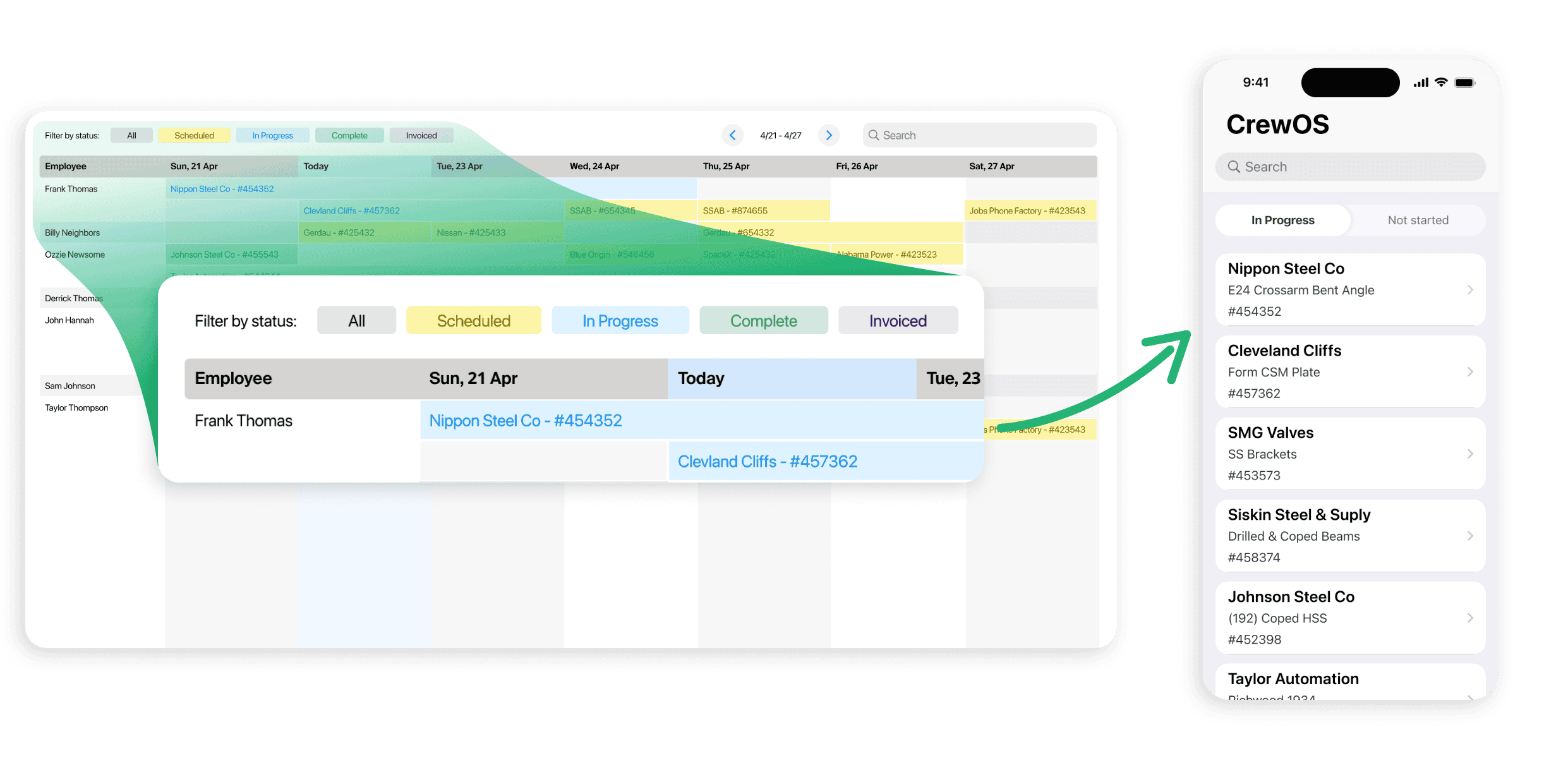
- Consider a scheduling tool, like crewOS, that offers real-time visibility, centralized data, and flexibility.
Conclusion: Scheduling Is Strategy.
When managed right, scheduling becomes the command center for your operation. An all-in-one system like crewOS lets you make your scheduling clean, visible, and efficient. Additionally, your scheduling lives in the same place with other key operational features, like asset management, inspections, time tracking, and more.
Workers don’t just show up to jobs. They rely on a system that respects their time, skills, and conditions. Companies don’t just dispatch crews. They need to build trust, predictability, and reliability.
The difference between chaos and control starts here.
…
Ready to look at your current scheduling efforts and see where you can grow?
Let's Connect
We’ll help you gain the edge every field service operation needs.