In the crane service world, every job brings complexity: tight schedules, heavy equipment, multiple crews, and compliance expectations that never stop. Field technicians capture hours and complete work orders. Office teams chase down signatures and approvals. Meanwhile, every paper receipt, handwritten note, or emailed photo chips away at your team’s productivity.
There’s one area that quietly drains time, accuracy, and profit on every job: manual expense tracking.
In this blog, we’ll explore the hidden cost of old-school expense processes, and how the right digital tools can eliminate this headache for crane companies.
Why Manual Expense Tracking Still Costs You
Most crane service teams rely on imperfect, fragmented processes for capturing expenses. This can look like paper receipts stuffed in pockets until end of week, photos of receipts saved in phone galleries, hand-written notes passed to office staff, and/or duplicated entry into spreadsheets or accounting systems.
If these workflows feel familiar, they are make your team’s life harder in three major ways:
1. It Delays Visibility into True Job Costs
When receipts sit in the field for days, expense data doesn’t reach the office until long after the job finishes. That delay means:
- Finance teams can’t finalize job cost reports
- Managers don’t see what a job really costs until too late
- Jobs are billed without all expenses accounted for, essentially killing your margins
In crane service, where margins can be thin and billing cycles tight, this reactive approach silently erodes cash flow and profitability.
2. It Introduces Errors and Lost Information
Paper receipts fade, get crumpled, or go missing entirely. Photos saved on phones can be unclear or misplaced. Handwritten notes can be illegible. Combined, these problems lead to lost or incomplete expense data, incorrect categorization of charges, duplicate entries, and reconciliation headaches.
Every manual entry point is a chance for human error, which directly impacts your ability to invoice accurately and forecast profit margins.
3. It Draws Office Teams Away from High-Value Work
Your office staff—the ones who should be analyzing data, improving operations, and serving customers—spends hours each week:
- Retrieving receipts from technicians
- Re-typing the same expense data multiple times
- Correcting input errors
- Chasing team members for missing submissions
That’s expensive labor that adds no value to your customers or your team’s productivity.
Why Your Teams Deserve Better
Crane field service teams don’t want to spend time filing paperwork. Your technicians want to be on job sites, delivering safe equipment service and maintenance. Your office staff wants accurate data available quickly.
Yet many teams are stuck with processes rooted in paper, spreadsheets, and manual entries.
Your technician should be able to complete work and automatically submit expenses with the click of a button.
Receipts should be captured and organized digitally without paper or photo galleries.
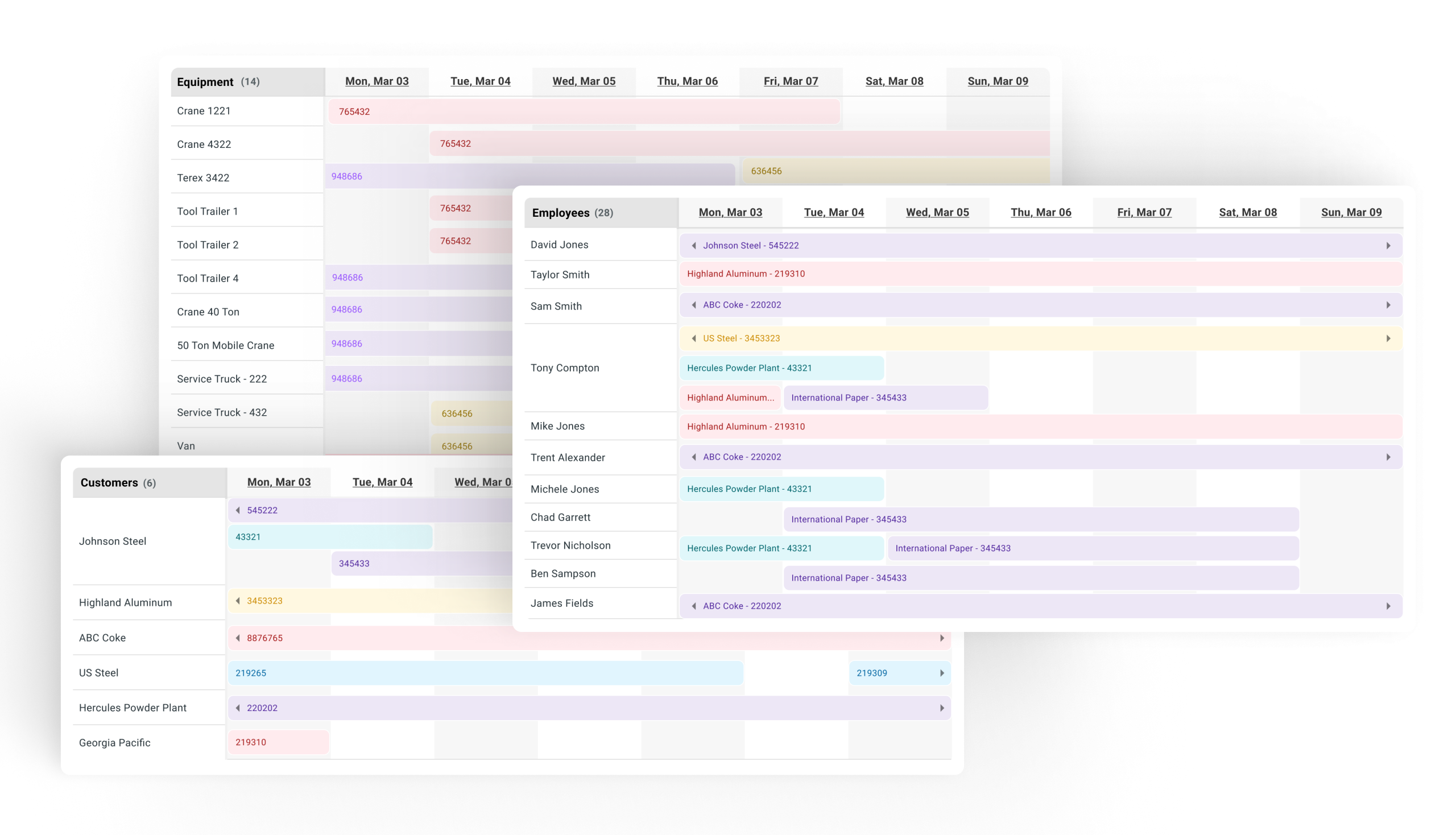
Accounting should have real-time expense info tied directly to jobs and crews.
This is how modern field service management should work and CAN work.
How Digital Tools Eliminate Expense Tracking Headaches
Digital expense tracking tools modernize field service workflows by:
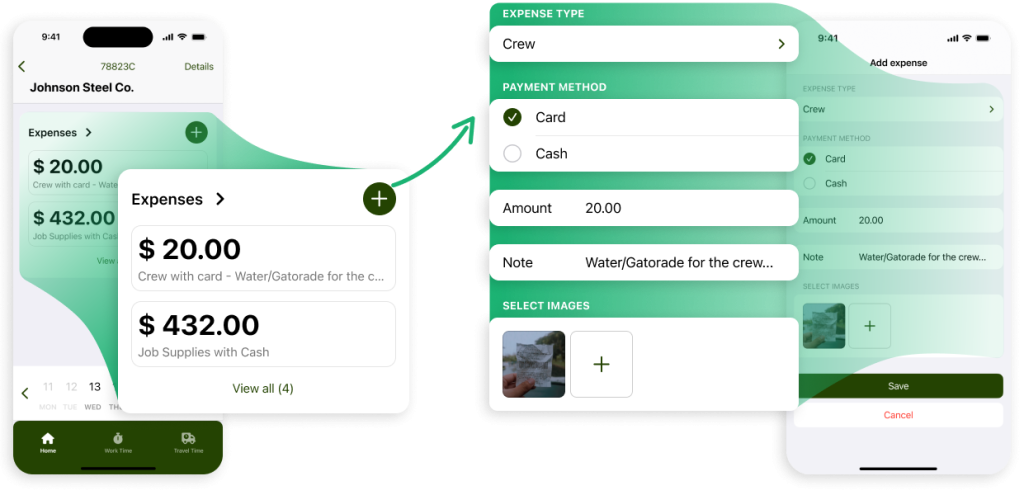
| Capturing Receipts in Real Time | Technicians snap a photo in the field. The image attaches directly to the job record, eliminating pockets full of paper and phone galleries full of unorganized receipts. |
| Auto-Linking Expenses to Jobs & Crews | No more guessing where a cost belongs. Digital entries attach in real time to the right work order, crew, and customer. |
| Reducing Manual Entry and Errors | Instead of re-typing data from paper, teams enter once and the system distributes the information to accounting, payroll, and reporting. |
| Speeding Up Billing and Close-Out | When expenses are submitted the moment they’re incurred, billing can happen faster, with fewer surprises and fewer missing charges. |
What This Looks Like in Practice for Crane Teams
In a digital workflow:
- A technician on site logs a meal or supply purchase
- They attach the receipt through their mobile app, even offline
- The expense is categorized and matched to the job automatically
- Office staff see the data instantly, no chasing required
- The job cost report reflects the real total cost in real time
- Billing, payroll, and analytics are ready without duplication or delay
Days of manual effort are replaced with minutes of digital work.
Why Expense Tracking Matters for Profitability
For crane service businesses, expenses aren’t a small detail. They’re part of the bigger financial picture. When expense data is delayed, chaotic, or inaccurate:
- Job profitability is unclear
- Forecasting is unreliable
- Customer billing is late or incomplete
- Office morale suffers from busywork
But when expense tracking is streamlined:
- Labor and expenses are visible instantly
- Invoicing happens faster
- Profit margins are more predictable
- Teams spend time on revenue-generating work
The Bottom Line
Manual expense tracking slows you down, hides real job costs, introduces risk, and eats up valuable time that your field and office teams could spend on higher-value work.
For crane companies that want to eliminate manual work, improve accuracy and visibility, speed up billing cycles, and understand true job costs, digital expense tracking is a must-have.
Modern tools like crewOS bring expense capture, job tracking, and cost visibility together in a single platform, so you can move faster, operate smarter, and grow your business without letting receipts and spreadsheets slow you down.
…
Ready to make the switch?
Let's Connect
We’ll help you gain the edge every field service operation needs.